Wood or Composite Racket: What the Frame Material Changes
Wood or composite racket frames affect balance, stiffness, vibration and care. Learn what the material changes so you can compare rackets with clearer criteria.
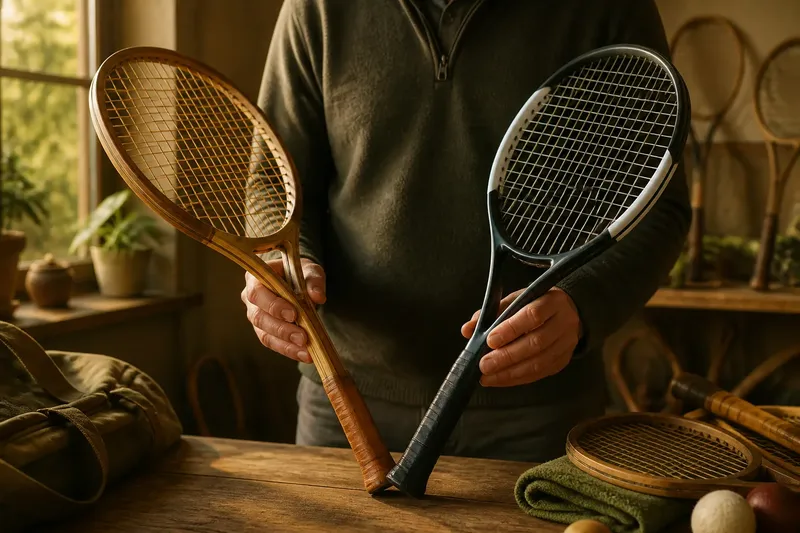
On a shop wall, two rackets can look nearly identical until you lift them: one settles heavily into the hand, while the other feels quick to turn. Wood or composite racket construction helps explain that difference, though the material label is only part of the story. It influences how designers manage mass, stiffness, vibration and durability.
Neither material is automatically better. The useful question is which trade-offs suit the racket’s purpose and your preferences.
How does wood or composite racket construction shape a frame?
A wooden frame is made from joined pieces of wood, often shaped and laminated to create a continuous structure. Its properties depend on the wood species, grain, layers, adhesives and frame geometry. Wood brings a distinctive combination of density and flexibility, but the frame’s design matters as much as the material name.
Composite frames combine reinforcing fibers, commonly glass or carbon, with a resin matrix. The fibers carry much of the load, while the resin holds them in a planned shape. By changing fiber direction, layer placement and frame profile, a maker can tune different parts of the frame rather than relying on one uniform material behavior.
“Composite” is a broad category, not a synonym for one exact feel. A frame may use several materials or layups, and its listed material does not disclose every detail of its construction. Treat the names as clues, not a complete specification.
What changes in weight and balance?
Wooden rackets are often associated with a solid, substantial feel. Their mass and distribution can make the racket feel stable through contact, though a heavier-feeling frame may take more effort to reposition quickly. Weight alone does not tell the whole story: where that weight sits influences how the racket swings.
Composite construction gives designers more freedom to place material strategically. A frame can be made lighter in some regions and reinforced in others, allowing varied balances and swing sensations. That does not mean every composite racket is light or easy to maneuver; a particular model’s shape and mass distribution still determine how it moves.
When comparing rackets, hold each in a ready position and make a few gentle, controlled practice swings. Notice whether the head feels slow to bring around or the handle feels unusually dominant. This comparison is more useful than assuming the material label predicts balance.
Compare how the racket turns, not just how heavy it feels while standing still.
How does frame stiffness affect feel?
Stiffness describes how much a frame resists bending under load. A more flexible frame bends and recovers differently from a rigid one, changing the timing and sensation of contact. Players may describe that feeling as soft, muted, lively or firm, but those impressions depend on the whole racket rather than frame material alone.
Wood’s natural structure and the way its layers are joined influence its flex. Composite layups can be designed to resist bending in selected directions, so makers can shape stiffness across the hoop and throat. Frame geometry, string pattern and string tension also influence the response a player feels.
Say you are choosing between two rackets for relaxed recreational play. Racket A feels comfortable on gentle practice strokes; racket B feels crisp but demanding. You make the same easy strokes with both, then choose A for that session because its contact feels more comfortable. That is a preference based on the stated use, not proof that A will suit every player.
What does the material do to vibration?
At impact, a frame can vibrate, and the sensation reaching the hand depends on how those vibrations travel and decay. Wood and composite structures transmit vibration differently, but there is no simple rule that every wooden racket feels comfortable or every composite racket feels harsh.
Resin systems, fiber orientation, frame shape, grip construction and strings all contribute. Even two composite frames can produce noticeably different sensations. A label that names carbon fiber, for example, cannot tell you how the racket will feel without details about its design and a chance to handle it.
If comfort is a concern, pay attention to the sensation during controlled hitting rather than choosing by material reputation. Persistent pain is not a racket-review problem; stop playing and seek appropriate professional advice.
Which material tolerates everyday knocks and storage changes?
Wood can be affected by moisture and changes in storage conditions. A wooden frame left damp or exposed to rough handling may be more vulnerable to warping, splitting or damage at joints. Keep it dry, store it away from prolonged heat, and avoid leaning heavy gear against it.
Composite frames are not immune to damage. A hard impact can cause cracks or other hidden structural harm, even when the outer finish looks mostly intact. A frame with visible cracking, unusual distortion or a new rattling sound should not be treated as sound simply because it is made from modern materials.
Do not use a racket with suspected structural damage. Follow the maker’s care instructions and ask a qualified racket technician or the manufacturer if the frame’s condition is uncertain.
How should you choose between wood and composite?
Start with the racket’s intended sport and use. Wooden rackets are most often encountered in older designs, specialist contexts or as display pieces, while composite construction is common in many current performance rackets. Consider material alongside grip fit, head shape, stringing, balance and the level of play the racket is designed for.
- If the frame feels solid and traditional in your hand, then: consider a wooden racket, but check the joints and frame for damage; if you find a crack or separation, do not use it for play.
- If you want to compare engineered responses, then: handle composite models and judge each by feel, balance and intended use; if the material label is the only detail available, seek model-specific information before deciding.
- If you want a display or collection piece, then: inspect its construction and condition and consider its storage needs; if it cannot be kept dry and protected, choose a more suitable display location or another frame.
- If you plan regular play, then: make controlled swings and check that the racket suits your sport and feels manageable; if it feels difficult to turn or uncomfortable, compare another model.
- If comfort during contact is your priority, then: compare rackets with similar grip fit and string condition; if discomfort persists during play, stop and seek appropriate professional advice.
- If a racket has a new rattle, distortion or visible crack, then: take it out of use and ask the manufacturer or a qualified racket technician about inspection; if its structural condition cannot be assessed reliably, do not return it to play.
Keep the comparison steady. If possible, use rackets with similar grip fit and string condition, then notice how readily each turns, how contact feels and whether it remains comfortable through ordinary practice. Avoid making a decision from a single hard hit, which is a poor way to assess equipment.
Which racket-frame questions do players ask?
Are wooden rackets still used for regular play?
They can be, where the racket is in sound condition and appropriate for the sport and playing context. Their feel and maintenance needs differ from many contemporary composite designs, so suitability depends on the model and the player.
Are composite rackets always lighter?
No. Composite construction allows designers to make frames with varied mass and balance, but it does not dictate one fixed weight. Compare the individual rackets in hand rather than relying on the material category.
Can you repair a cracked racket frame?
A crack may indicate structural damage, and a surface touch-up cannot establish that the frame is safe to use. Ask a qualified racket technician or the manufacturer about inspection and repair options; replace the racket if its condition cannot be assessed reliably.
Does frame material matter more than strings?
Neither is the only influence on feel. Frame construction, string type and tension, grip and balance interact, so a material comparison is clearest when the other relevant features are also considered.
What should the material label tell you?
Wood or composite racket construction gives a useful starting point, not a verdict. Wood tends to bring a particular structural character and closer attention to storage, while composite layups give makers more ways to tune stiffness, mass placement and response. The finished frame can still surprise anyone who expects the material name to explain everything.
When a racket is available to handle, let its balance and contact sensation settle the comparison. When it is not, look for model-specific construction details and care guidance, then choose with the intended use in mind. A material label narrows the question; a controlled comparison helps you choose a frame suited to your play.