The Damp Kit Bag Myth: Airing Gear Is Not the Same as Washing It
Airing gear helps it dry, but washing removes soil and residue. Use this kit-bag routine to sort used sportswear and protect equipment by its care label.
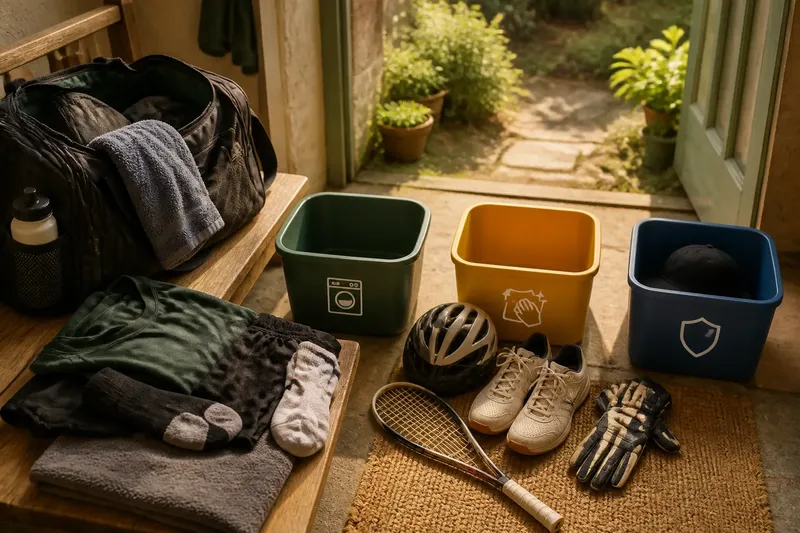
The kit bag lands beside the back door, and the first thing out is a damp shirt that has spent the trip home pressed against a towel. Leaving everything open overnight may help the smell; it does not make the shirt clean. Airing sports gear and washing it do different jobs, and a useful post-play routine starts by separating them.
Airing moves moisture away from fabric and equipment. Washing uses water and, where suitable, detergent to lift sweat, skin oils, dirt and other residue. One can make gear dry without removing that residue; the other can clean an item that still needs to dry thoroughly. Treating them as interchangeable is how a bag becomes a portable argument against optimism.
What should come out of the kit bag first?
Open the bag when you get home, rather than leaving it zipped in a hallway or car. Take out every used item, including the small things that hide in side pockets: socks, wristbands, a headband, spare clothing and the towel. Empty drink bottles and remove loose rubbish. Give the bag’s compartments a quick look for damp fabric or grit.
Now sort the contents into three groups: washable clothing and textiles, equipment that needs surface care, and items that should stay dry or be checked separately. A practice shirt and socks generally belong in the first group. A racket, helmet, shoes, gloves or protective pad may need a different approach. Do not put an item in a washing machine simply because it is soft or fits inside the drum.
Check care labels and the maker’s instructions before washing any specialised garment or piece of equipment. If the label is missing or unclear, use the manufacturer’s guidance for that item rather than guessing from how it looks.
Keep clean clothing out of the pile. A dry spare shirt packed beside a used one is still at risk of picking up moisture and odour.
Which gear needs washing, and which needs airing?
Washable clothing that has been worn directly against the skin usually needs laundering after use. Sweat, skin oils and dust can remain after the fabric dries, even when it no longer feels damp. Socks, base layers, shirts and washable towels are common candidates. A quick sniff is not a reliable substitute for washing; noses are generous to familiar smells.
Airing is appropriate for drying items that should not be washed after every use, as well as for textiles between uses when they are not soiled and the care instructions allow it. Some equipment has padding, coatings, adhesives or structural parts that can be damaged by immersion, heat or aggressive cleaning. Wiping or spot cleaning may suit those items better than machine laundering.
Some kit needs both treatments, in sequence. A washable garment should be cleaned, then dried fully. A helmet or racket may need an approved surface wipe followed by drying in an open, ventilated place. Airing is the drying stage, not a substitute for whichever cleaning the item requires.
How should washable kit be sorted before laundering?
Separate items by care instructions and fabric needs. Keep delicate or technical garments away from rough items such as shoes, hook-and-loop straps or gear with exposed hardware. Fasten closures where the garment instructions allow, turn items inside out if recommended, and empty pockets. These small steps reduce snagging and make it less likely that a sock emerges wearing a new attachment.
Use detergent according to its label and the garment’s care directions. More detergent is not a useful remedy for a strong smell; excess product can remain in fabric. Choose a wash setting that fits the item’s instructions rather than assuming that hotter or harsher is better. Avoid fabric softener where the garment maker advises against it, particularly on technical textiles designed to manage moisture.
Keep shoes and protective gear out of the clothing load unless their instructions explicitly permit machine washing. Remove loose dirt with a suitable brush or cloth, and use a mild cleaning method appropriate to the materials. For a delicate or specialised item, manufacturer guidance is more useful than a broad rule about sports gear.
How do you dry gear without trapping dampness?
Remove clean textiles from the washer promptly. Shake them out, open folds and pockets, and hang them with enough space for air to move around the fabric. A drying rack in a ventilated room or a sheltered outdoor spot may work, depending on the item’s instructions and local conditions. Avoid putting wet kit back into the bag, even if the bag is open.
Do not assume that a tumble dryer, radiator or direct sun is suitable. Heat and prolonged exposure can affect elastic, printed designs, coatings and synthetic fibres. Follow the label. If air drying is required, let the garment dry completely before folding or packing it.
For equipment, use a clean cloth to remove surface moisture, open removable or adjustable parts only as the maker permits, and leave the item in a ventilated place. Do not force open a sealed component or use a heat source to speed things along. Drying should not become an improvised repair procedure.
What questions come up after play?
Does airing sportswear remove sweat residue?
No. Airflow can help moisture evaporate, but it does not reliably remove oils, soil or residue from fabric. Wash the garment according to its care instructions when it has been worn and needs cleaning.
Can a damp kit bag be left open overnight?
Leaving it open helps the bag and its contents air out, but it does not clean them. Remove used clothing and towels first, and let the empty bag dry with its compartments open.
Should shoes go in the washing machine?
Only if the shoe maker says machine washing is suitable for that model. Otherwise, remove loose dirt with a brush and clean the surfaces using the recommended method, then let the shoes dry with airflow.
What if an item still smells after washing?
Check whether detergent use, wash settings and drying followed the care instructions, and make sure the item was fully dry before storage. If the odour persists, consult the maker’s cleaning guidance rather than adding stronger products or heat on impulse.
How should you handle kit that cannot be washed?
Wipe equipment with a clean, slightly damp cloth only when its instructions allow it. Use a product specifically approved for the material if one is required; an ordinary household cleaner may affect a finish, grip or foam. Do not soak seams, padding or parts that are not designed to be immersed.
For shoes, loosen laces and open the tongue to help the interior air out, if the construction permits. Remove insoles only when they are designed to come out. A dry cloth can lift surface grime, while a suitable brush can help with dry dirt. Keep footwear away from direct heat, which may affect adhesives and shape.
Protective items deserve particular restraint. Wipe helmets, pads and gloves only as their makers recommend. Do not apply deodorising sprays, disinfectants or strong solvents unless the instructions approve them; a pleasant scent is not evidence that a material remains unaffected.
How do you reset the bag before packing again?
Once the contents are dry, inspect the bag itself. Shake out crumbs and grit, wipe visible dirt from the lining with a suitable cloth, and leave pockets open until the interior is dry. If the bag’s care label permits washing, follow it; otherwise, avoid soaking the bag or scrubbing coated areas with an unapproved cleaner.
Imagine you return from practice with a damp shirt, muddy shoes and a helmet. You take everything out, send the shirt through a label-appropriate wash, brush loose dirt from the shoes, and wipe the helmet only as its maker allows. The shirt dries on a rack, the shoes air with their openings loosened, and the helmet dries in a ventilated place. The observable result is a bag packed with dry, separately cared-for gear—not a bundle that merely smells less urgent.
When you pack for the next session, put dry items in a clean, dry bag and keep any spare clothing apart from used kit. A mesh laundry pouch can contain worn textiles for the trip home, but it does not replace prompt sorting once you arrive. The practical distinction is simple: airing helps gear dry; washing cleans washable gear. Use both where the item calls for both, and let its care label settle the finer points.