Inside a Tennis Ball: Felt and Rubber Have Different Jobs
Inside a tennis ball, felt shapes its contact with air and court while rubber stores bounce; learn how their construction explains the ball’s feel.
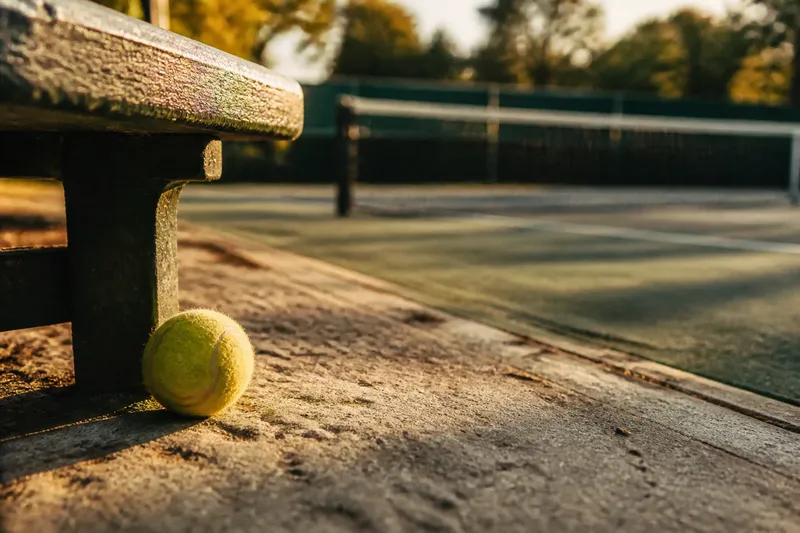
A tennis ball skids under a bench, and its fuzzy yellow coat catches on a rough patch of concrete. Inside a tennis ball, felt and rubber have separate jobs: the felt meets the air and court, while the rubber shell supplies the spring. Knowing which part does what makes a ball’s feel less mysterious—and helps explain why surface wear changes it.
What does the rubber core contribute?
The core is a hollow, pressurised rubber shell. Its shape deforms when the ball hits a racket or court, then springs back. That deformation and recovery provide much of the rebound. The rubber is not a solid lump; it is a thin enclosure holding air under pressure.
On impact, the shell compresses and changes shape briefly. It then recovers, sending the ball away. Some energy is lost in the process, so a bounce is not a perfect return of the incoming motion. The rubber’s formulation, thickness and construction all affect how the shell responds, though those details are not visible on a finished ball.
Pressure also matters to the sensation of a hit. A pressurised ball generally feels livelier than a pressureless ball, whose construction relies more on the rubber’s own elasticity. The two types can differ in bounce and touch, so they are not simply interchangeable versions of the same object.
Why does the ball have a felt coat?
The covering is usually a woven textile with a fuzzy surface, commonly made from wool and synthetic fibres. It is bonded to the rubber core in shaped panels. The covering protects the shell from direct abrasion and gives the ball a textured outer surface rather than a bare, smooth one.
That texture interacts with air as the ball travels. The felt adds drag, affecting how quickly the ball slows and how it moves through flight. It also gives racket strings and court surfaces a fibrous layer to meet. The result depends on the ball’s speed, spin, condition and surroundings; felt is part of the interaction, not a separate steering device.
The coat also influences grip and touch. A new ball’s raised fibres can make contact feel different from that of a ball whose nap has flattened. On a brushed surface, the covering may pick up dust or fine debris, which changes its texture again. “Fuzzy” is a visible feature with practical consequences, not decoration added for cheerfulness.
How do the two materials work together?
The rubber and felt act as a combined structure. The core deforms to create rebound; the covering affects how the ball meets air, strings and court. A player feels both at once, so describing a ball as “soft” or “fast” does not identify one material as the sole cause.
Imagine you open a fresh can for a casual rally, then compare it later with a ball that has been used on a gritty hard court. The older ball’s felt may look flattened and carry a little court dust, while its shell may have lost some pressure. It may feel less lively and move differently through the air. Those observations point to different changes: coat wear is visible, while pressure loss cannot be judged reliably from appearance alone.
Construction helps explain the clues, but it does not let you diagnose every change by sight. A fuzzy coat can look worn while the core still rebounds acceptably; a clean-looking ball can feel dull. If a decision matters, use the ball’s intended playing category and the manufacturer’s guidance rather than treating a squeeze as a precise instrument.
What changes as a tennis ball wears?
Wear usually shows first on the covering. Fibres flatten, loosen or collect grime. That can alter the ball’s surface texture and its interaction with air and court. A ball with visibly damaged felt may also feel different in the hand and against the strings.
The core changes in a less obvious way. A pressurised ball can lose internal pressure over time, even when the felt still looks presentable. Its bounce may become less lively. Conversely, a pressureless ball does not depend on trapped internal pressure in the same way, though its rubber and covering still wear.
Storage and court conditions influence what a player notices. Dampness can make a ball feel heavier, while abrasive court grit can roughen or soil the coat. Heat and cold can also affect how materials respond. For ordinary use, keep balls dry and store them away from conditions the packaging or maker advises against.
What do players ask about tennis ball construction?
Does felt make a tennis ball bounce?
The rubber shell provides most of the ball’s rebound through deformation and recovery. Felt affects the ball’s contact with air, racket and court, so it influences play without acting as the main spring.
Why does a new tennis ball feel different?
Its felt fibres stand more distinctly, and a newly opened pressurised ball has not yet lost pressure through use. Both the surface and the core can contribute to the livelier impression.
Are pressureless tennis balls made differently?
They rely more on the rubber’s elasticity than on stored internal pressure for rebound. Their feel and bounce can differ from pressurised balls, so choose according to the intended setting and the product’s stated use.
Can worn felt be restored?
Once fibres are flattened, missing or badly soiled, cleaning will not restore the original weave or its texture. Replace a damaged ball when its condition interferes with the kind of play you want.
What can the feel tell you—and what can it not?
A quick look and a gentle squeeze can offer rough clues: flattened felt suggests surface wear, while a dull-feeling bounce may suggest a less lively core. Neither clue isolates one cause. The court, temperature and the player’s own racket and strings all shape the sensation at impact.
Use the ball’s feel as a reason to inspect it, not as a laboratory reading. For a regular game, keeping balls of similar condition together makes rallies more consistent than mixing a fresh ball with one whose coat is worn and shell less lively.
Inside a tennis ball, felt and rubber work as a joined pair, but they do not do the same work. The next time a ball feels unusually slow or springy, look at the coat and consider the core separately. That small distinction makes a more useful observation than calling the whole ball “dead” and leaving it at that.